 WMO
WMO
Understanding Bamboo Carbon Credits: How to Develop Full Lifecycle Carbon Asset
Bamboo is a perennial grass and can be an excellent carbon-removal crop. In practice, the viability of a bamboo carbon project depends on methodology, scale, additionality, monitoring, permanence, and the commercial pathway.
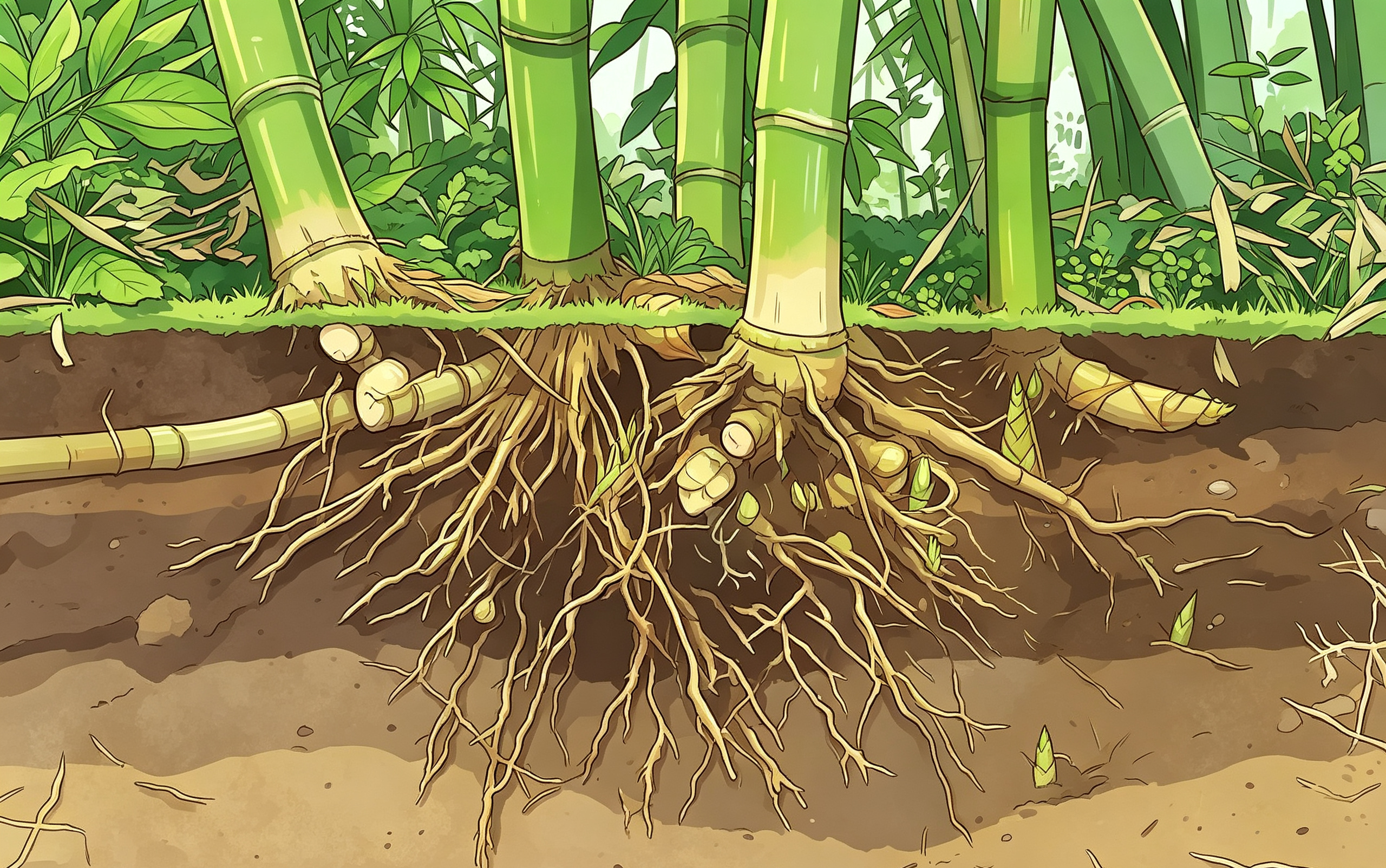
Bamboo easily replenishes itself after harvesting. In other words, like a lawn that’s been cut, the bamboo grows right back. Unlike trees and annual crops, which get harvested and then need to be replanted, The living rhizome system produces new shoots; bamboo plants do not die upon harvesting, and do not release stored carbon as logged trees do after felling.
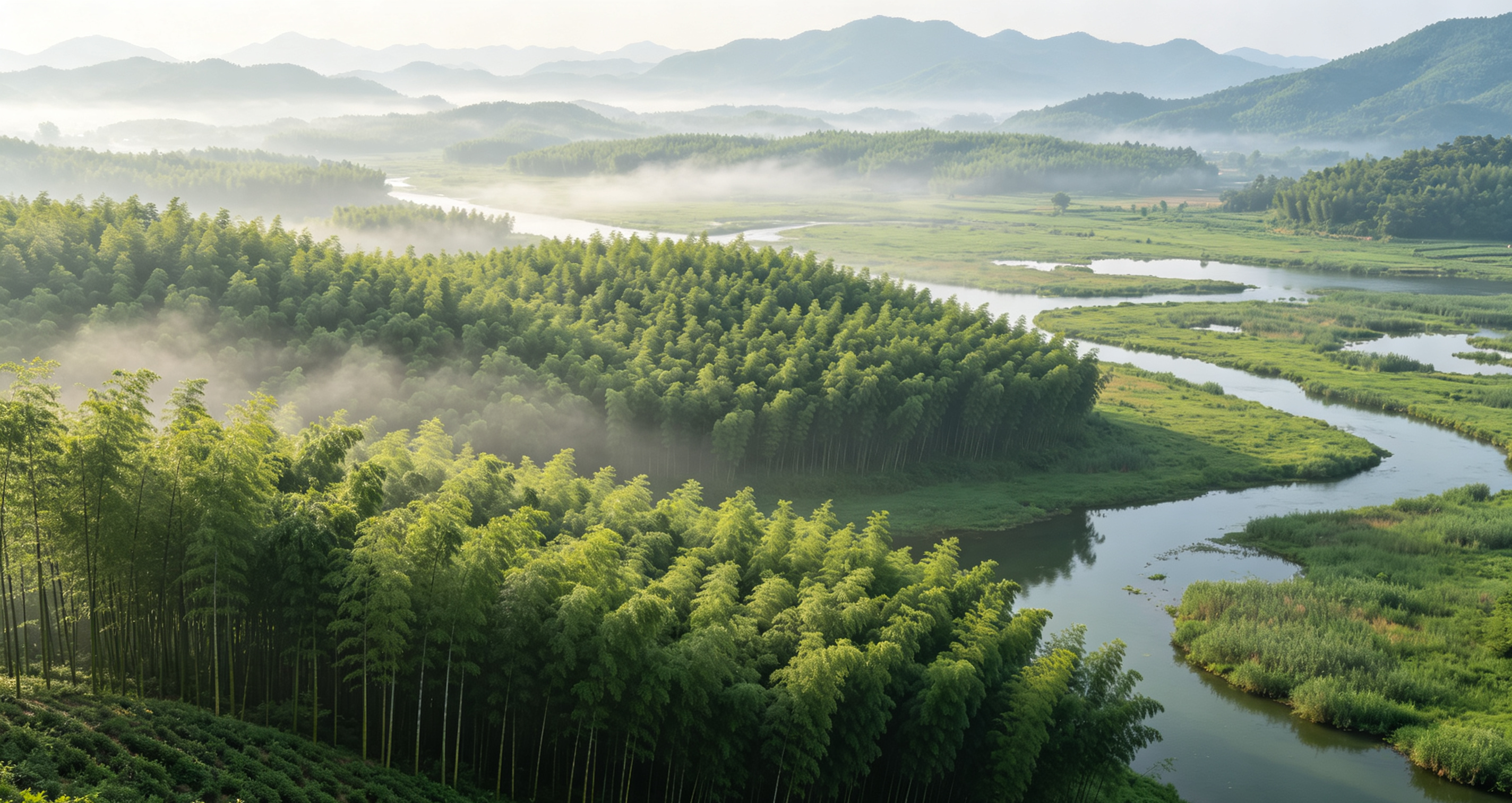
When the canes of a mature bamboo plant are harvested, the new culms that sprout up the following season will get to be just as large. This means it can be harvested annually, and the harvest will not reduce the following year’s yield. On the contrary, harvesting bamboo actually encourages the plant to produce more plentiful shoots.
Since the extensive rhizome system stays intact, significant carbon loss from soil carbon pools does not occur as happens with timber logging. All of these factors should convince us to support more cultivation and use of bamboo in construction and other manufacturing products as a greener alternative to lumber.
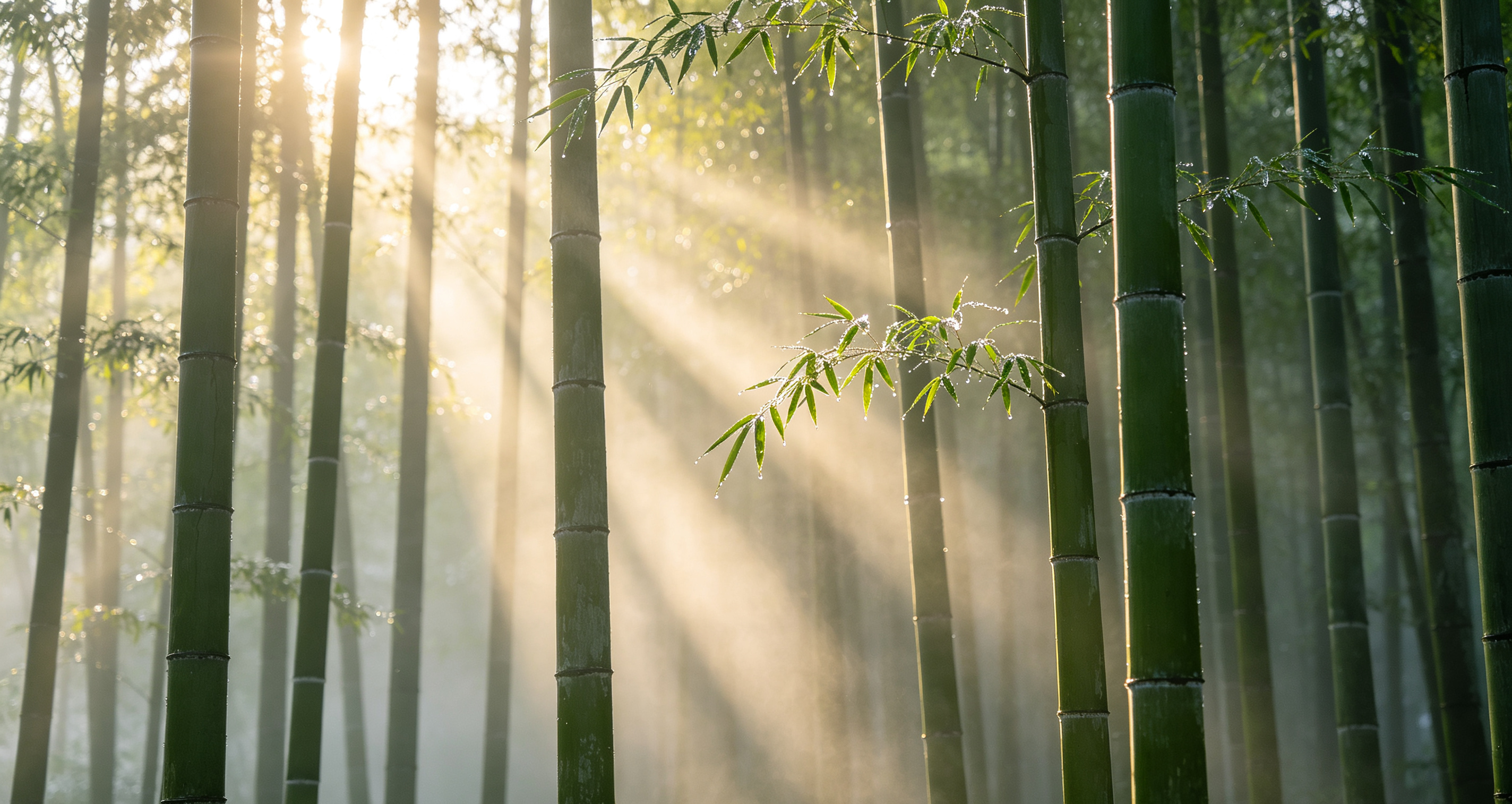
Bamboo’s rapid growth reflects an exceptionally active photosynthetic system, allowing it to convert large quantities of atmospheric carbon into plant biomass over relatively short periods.
Bamboo’s reputation as a climate solution rests on several real and important characteristics:
It grows extremely fast. Some species can produce new culms that grow an astonishing 2 to 3 feet per day during shooting season.
It matures quickly. Most commercial bamboos can be harvested after 5 to 7 years, compared to decades for timber trees.
It regenerates after harvest. Because bamboo is a perennial grass with a living rhizome network, it does not need to be replanted after every harvest.
It can accumulate large amounts of biomass.
It can substitute for more carbon-intensive materials, including concrete, steel, plastics, and certain timber products.
Bamboo, especially the waste material, is a very suitable feedstock for biochar, one of the most interesting carbon-removal pathways available today.
However, some bamboo species if only planted in the forest without planned harvest and regeneration schedule, its life span will only last within 10 years from date of plantation.
How much carbon does bamboo actually sequester?
According to research, mature timber bamboo can sequester between 13 and 24 tons of carbon per hectare per year, depending on the species. To convert carbon (C) to carbon dioxide (CO₂), we multiply by a factor of approximately 3.67. This means the sequestration rate is roughly 47.7 to 88 tons of CO₂ per hectare per year.
What makes bamboo unique is its ability to maintain high levels of productivity over long periods without replanting. Unlike conventional forestry, which may require decades between harvests, bamboo can continue generating new biomass every year while preserving its extensive root system and underground carbon stocks.
In other words, bamboo’s greatest climate advantage may be less about record-breaking annual sequestration rates and more about its capacity for continuous regeneration, harvest, and carbon accumulation over time.
BAMBOO RELATED…
Carbon stored in bamboo products
When bamboo is transformed into flooring, furniture, panels, housing materials, or engineered construction products, much of the carbon captured during growth remains stored in those products for years or decades.

This means bamboo can function as both a biological carbon sink while growing and a long-term carbon reservoir after harvest. The longer bamboo products remain in service, the longer that carbon stays out of the atmosphere.
Of course, the climate benefits depend on what the bamboo replaces. Using bamboo instead of steel, concrete, tropical hardwoods, or disposable plastics will often result in significantly lower lifecycle emissions.
From bamboo to biochar
Bamboo biochar, a charcoal-like product in which the carbon is fixed and stabilized. When applied to the earth, biochar increases soil fertility and creates a carbon sink that can last for many centuries. It’s a very practical and beneficial use for bamboo offcuts, or for whole bamboo poles in regions where there’s no well-developed value chain for bamboo products.
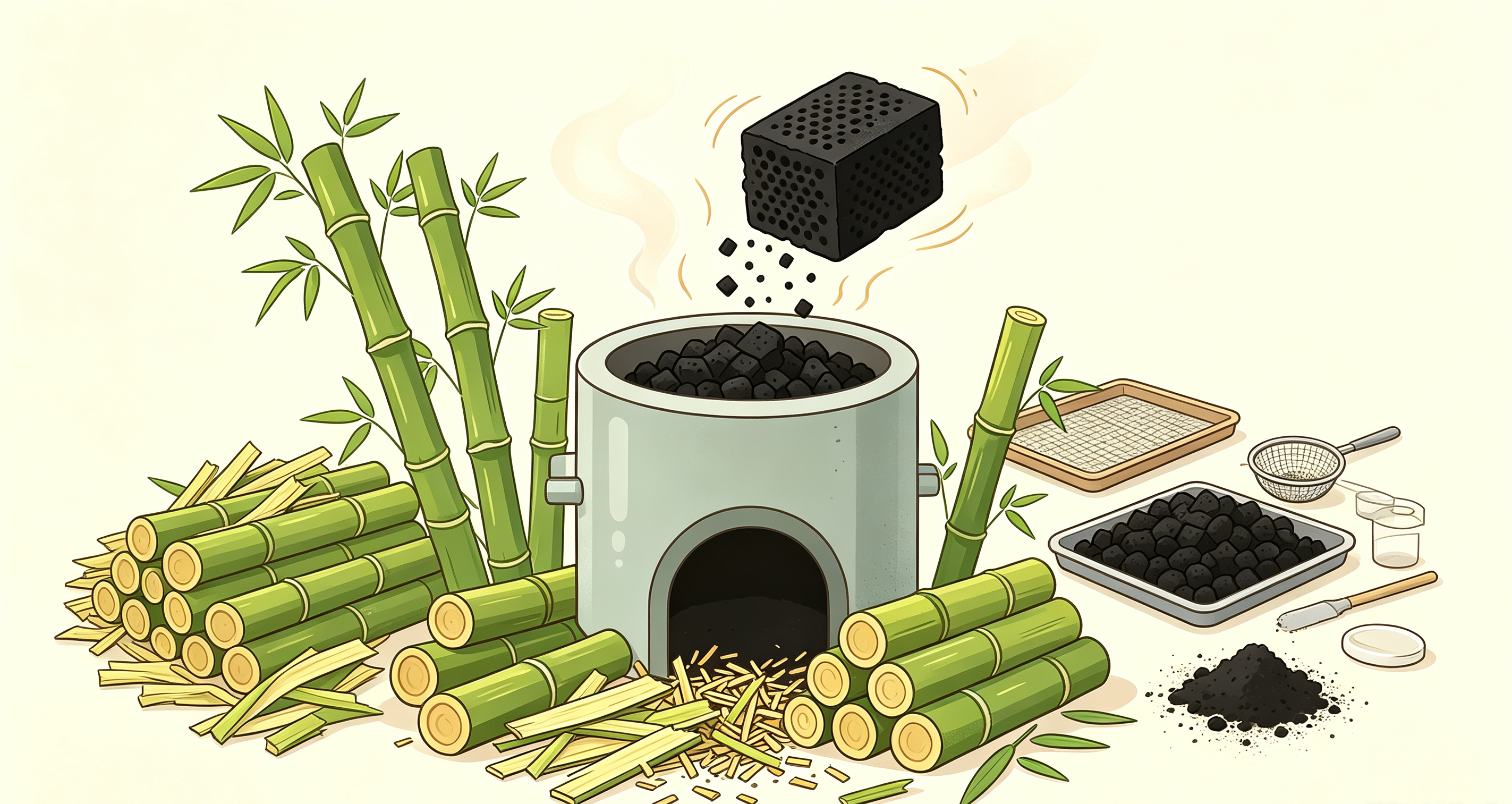
Not only does biochar deliver a range of agronomic benefits, but its capacity for long-term carbon sequestration can translate into high-value carbon credits. Unlike the CO₂ removed through bamboo forestry, which can be extremely difficult to quantify, the carbon in biochar is much easier to see and measure. This gives carbon credit buyers far greater confidence, and translates into a higher price for those credits.
For more information regarding Biochar, please read <The Rising Star of Carbon Credits: How Has Biochar Become the “Strongest Support” for Carbon Credits Projects?>